Why Klaviyo flows go stale: a quarterly audit framework
Most brands set up Klaviyo flows once and never revisit them. Here's the audit framework to keep them earning.
Klaviyo is the highest-leverage piece of email and SMS infrastructure most DTC brands have. It runs revenue while you sleep. The catch: it only runs revenue if it's configured correctly. And most brands don't audit.
Brands that set up Klaviyo at launch and don't revisit typically have 20-40 percent of their flows degraded after 12 months. Triggers misfire. Segments age out. Discount codes leak. Attribution drifts. Revenue leaks slowly enough that you don't see it on a chart.
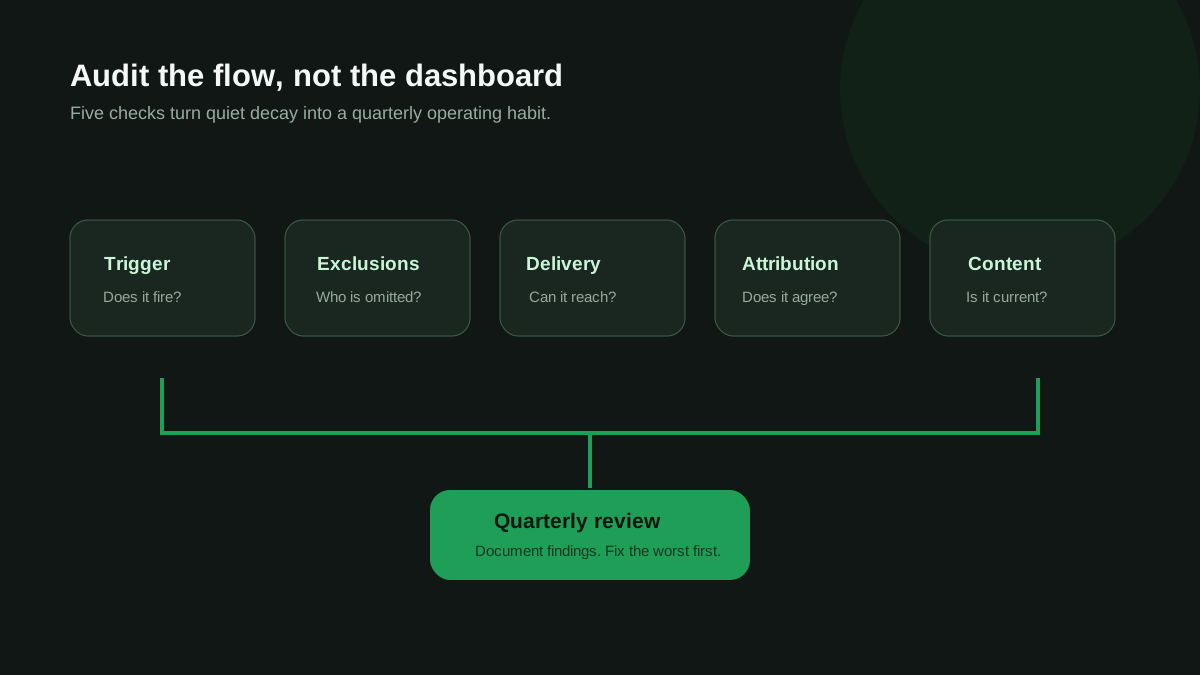
This is the audit framework I run for clients. Five checks, quarterly cadence, four hours of work.
Why flows go stale (and you don't notice)
Klaviyo flows degrade for three reasons:
- Klaviyo ships product updates. Triggers and integrations sometimes break silently when underlying APIs change.
- Your business changes. New SKUs, new fulfillment, new product lines. Flows written before those changes have stale assumptions baked in.
- Subscriber behavior changes. The segment that converted at 30 percent in 2024 might convert at 12 percent in 2026 because the buyer has shifted.
None of these show up as red flags in Klaviyo's UI. The flow keeps running, just less efficiently. Revenue degrades quietly.
The audit framework (5 checks)
Run each check on every active flow. Document findings. Fix the worst first.
Check 1: Trigger configuration
Open each flow. Verify the trigger event is still correct. Common drift:
- Abandoned cart flow triggering on Added to Cart instead of Started Checkout (too broad)
- Welcome flow triggering on Subscribed to List X but list X was renamed
- Post-purchase flow triggering on Placed Order but should be Order Fulfilled for some flows
Test the trigger manually. Create a test event, verify the flow fires correctly. Time required per flow: 5 minutes.
Klaviyo abandoned cart flow SOP
Step-by-step setup and configuration check for abandoned cart flows.
Check 2: Exclusion segments
Most flows have exclusion logic to prevent over-messaging. These are the most common source of silent drift.
Common issues:
- Exclusion segment uses a date filter that expired (named 'last-30-days' but uses hardcoded date)
- VIP segment that's exclusion no longer matches your current VIP definition
- Welcome series exclusion missing for cart abandon flow (causes double-messaging)
Spot-check 3 random profiles in each segment. Do they still belong? If the criteria don't match the actual profiles, the segment definition drifted.
Check 3: Deliverability
Klaviyo dashboards show overall deliverability. Drill deeper:
- Open rate per flow vs baseline 6 months ago. Sudden drops indicate deliverability issues.
- Spam complaints per send. Above 0.1 percent is a problem.
- Sender reputation: check Postmaster Tools for Gmail signal.
If deliverability dropped, the cause is usually: list quality degradation, content shift, or domain authentication problems (SPF, DKIM, DMARC).
Try it on one of your own procedures.
Record a process once, AI writes the structured SOP. 3 free SOPs, no credit card.
Check 4: Attribution accuracy
Klaviyo's revenue attribution can drift from your other analytics tools (GA4, Triple Whale). Reconcile:
- Pull Klaviyo flow revenue for last 30 days
- Pull email-attributed revenue from GA4 for same period
- Pull Klaviyo channel from Triple Whale for same period
- Variance over 20 percent between any two = investigate
Common attribution drift: UTM tagging missing on emails, attribution windows mismatched between platforms, server-side tracking missing.
Check 5: Content freshness
Open the email content in each flow. Read it as a subscriber:
- Product references current? Or referring to discontinued items?
- Imagery on-brand? Or using last year's hero?
- CTA matches current pricing and promotions?
- Links still work? (Test 3 random links per flow)
Stale content drops conversion 30-50 percent within 12 months. Refresh quarterly, even if you just update the hero imagery.
The flow performance audit scorecard
Findings in a doc get read once. Scores get compared quarter over quarter. After running the five checks on a flow, score each check 0 to 2 and add them up. Every flow gets a mark out of 10, and the account gets a league table.
| Check | 2 points | 1 point | 0 points |
|---|---|---|---|
| Trigger | Fires correctly on a test event | Fires, but on a broader event than intended | Wrong event, renamed list, or doesn't fire |
| Exclusions | Spot-checked profiles all belong | Logic is dated but harmless | Missing or wrong, causing double-sends |
| Deliverability | Open rate within 10 percent of six months ago | Slipped 10-25 percent | Down more than 25 percent, or complaints above 0.1 percent |
| Attribution | Within 20 percent of GA4 | 20-40 percent variance | Over 40 percent variance, or UTMs missing |
| Content | Products, prices, and links all current | Cosmetic staleness only | Discontinued products, dead links, or wrong prices |
Reading the score: 9-10 means leave it alone. 7-8 means fix it this quarter. 6 or below means the flow is actively costing you money, so pause it and rebuild before the next send goes out. Sort your league table by monthly flow revenue times inverted score and work from the top. A 5-point abandoned cart flow outranks a 3-point sunset flow every time.
The scorecard is also what makes the audit stick as a team habit. A new CRM hire can run it in their first month without judgment calls, and two quarters of scores tell you whether your Klaviyo account is getting healthier or quietly rotting.
The flows everyone forgets: sunset, VIP, browse abandonment
The five checks assume the flow exists. Three flows routinely fail a different way: they were never built, or were built once and abandoned. All three sit outside the revenue spotlight, which is exactly why they drift the furthest.
The sunset flow
A sunset flow suppresses profiles that stopped engaging, and most accounts either don't have one or have one pointed at a broken segment. Build the sunset segment on 120 days with no opens, no clicks, and no site activity, send one final win-back message, then suppress everyone who doesn't bite. The catch to audit: Apple's privacy features inflate open rates, so a sunset segment built on opens alone ends up matching nobody. Rebuild it on clicks plus site activity and the segment starts filling again.
If you skip everything else in this section, keep the sunset flow. Continuing to mail 20,000 dead profiles is the single most common cause of the deliverability slide in Check 3.
The VIP flow
VIP flows fail through definition drift. The entry criteria were set once, usually a fixed spend threshold, and never revisited. A $500 lifetime-spend threshold from 2024 makes half your 2026 customer base 'VIP' after two years of growth and price increases. Audit the entry segment yearly: it should capture roughly your top 5 percent of customers by lifetime value, whatever the dollar number needs to be this year.
Browse abandonment
Browse abandonment fires more often than any other flow, so its content goes stale fastest and its collisions hurt most. Two things to check: frequency caps against the abandoned cart flow (a shopper who browsed, carted, and left should not get both sequences in the same evening), and whether the product blocks still render for items that changed collections.
Klaviyo segmentation strategy SOP
The segment definitions behind sunset and VIP flows, and how to keep them from aging out.
Klaviyo win-back campaign SOP
The last message a profile gets before the sunset flow suppresses it.
How often to run the audit
Quarterly is the right cadence for most brands above $1M ARR. Monthly is overkill. Annual misses too much drift.
Calendar it. First week of each quarter. 4 hours total for a brand with 15-25 active flows. Assign one person (the CRM owner). Document findings in a shared doc so trends compound across quarters.
After one year of quarterly audits, expect your Klaviyo revenue per recipient to improve 20-40 percent vs no audit cadence. The improvement compounds because each audit catches drift before it deepens.
Where to start tomorrow
Pick your 5 highest-revenue flows. Run the 5-check framework on those. Fix the worst issue per flow. That's 5 hours of work and the highest-ROI Klaviyo maintenance you can do this quarter.
If you want to capture the audit findings systematically, ReccordSOP turns workflows into documented SOPs with timestamped screenshots, and drift detection alerts when your Klaviyo setup changes.
Klaviyo SOPs library
Abandoned cart, welcome series, post-purchase, segmentation, and more.
Frequently asked questions
How long does a Klaviyo audit take?
About 4 hours for a brand with 15-25 active flows. Cut to 2 hours if you focus only on the top 5 revenue flows.
Should I audit Klaviyo flows or campaigns first?
Flows. They run continuously and degrade silently. Campaigns are one-offs and you'd notice if they're broken.
What's the most common drift problem you find?
Exclusion segments that aged out. Specifically welcome series exclusion missing from abandoned cart, causing duplicate messaging.
Do I need a Klaviyo agency to run audits?
Not at $1-5M ARR. An in-house CRM person can run the framework above. Above $5M, agencies add value through historical pattern recognition.
What is a Klaviyo flow performance audit?
A structured review of every active flow against five checks: trigger, exclusions, deliverability, attribution, and content. Each check is worth 0 to 2 points, so a flow tops out at 10. Anything under 7 gets fixed that quarter, and tracking the numbers over time shows whether account health is improving.
Do I need a sunset flow in Klaviyo?
Once your list passes roughly 10,000 profiles, yes. Suppressing subscribers with no clicks or site activity in 120 days protects sender reputation for everyone else, and typically lifts open rates 3-5 points within two months. Build the segment on clicks and site activity, not opens, which Apple's privacy features inflate.
Ready to record your first SOP?
3 free SOPs to start. No credit card required. See if drift detection keeps your docs honest.
Start for freeI built ReccordSOP after watching too many DTC ops teams lose months to undocumented workflows. These SOPs are battle-tested with Shopify operators running $1M to $50M brands.
Last reviewed August 19, 2026
Related reading
SOP drift: why your documentation is lying to you
Most SOPs are wrong within 90 days of publishing. Here's how to detect it before it costs you a customer.
The Klaviyo deliverability SOP: the routine that keeps you out of spam
Deliverability doesn't break. It decays. Your sender reputation rots one unengaged send at a time until Gmail quietly routes you to spam.