SOP version control without the overwrite: keep every change visible
A version history tells you what existed. A step-level diff tells your team what changed and whether it affects the work.
SOP version control should answer one question: what changed between the SOP the team used yesterday and the one they should use now? Saving only the latest capture cannot answer it. You get a polished current document, but no clear way to inspect the change.
The better model is a visible, diff-based history. Every approved version stays linked to the one before it. Changed steps are easy to spot. The current SOP has a clear path through the choices that shaped it. Version control stops being file storage and becomes a work habit.
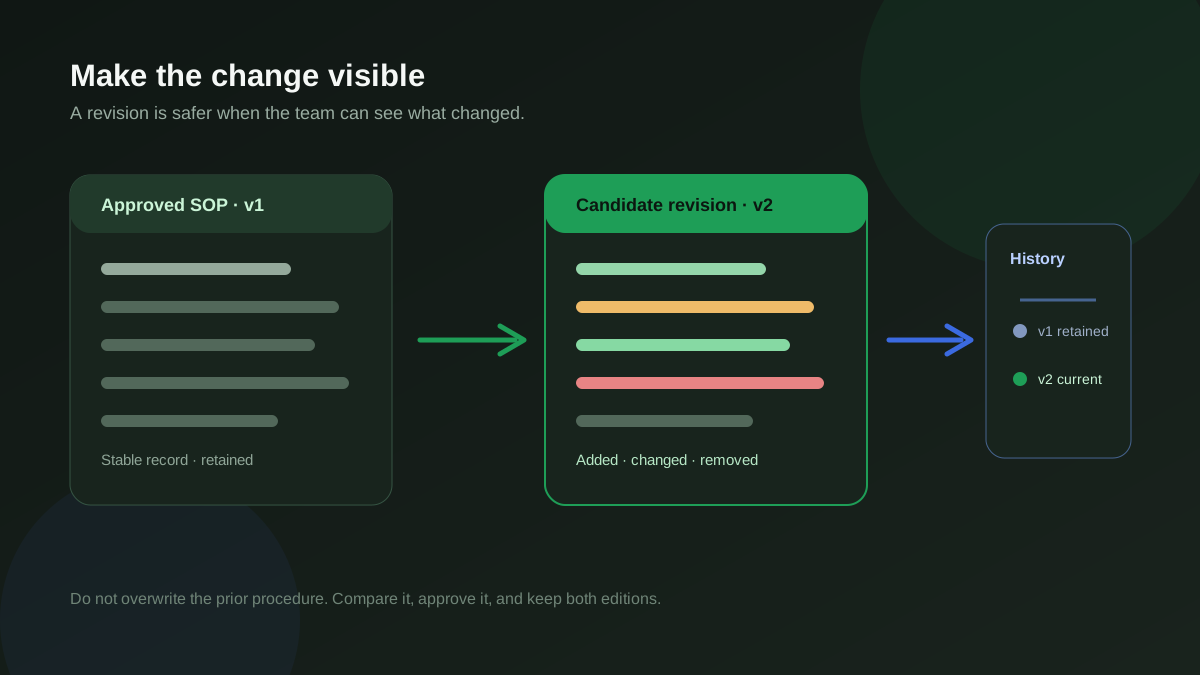
Version history answers what existed. A clear diff answers what changed. A useful control system gives the team both.
What is SOP version control?
SOP version control is the set of rules for changes over an SOP's life. It defines which edition is current, who may edit it, how review works, and how the people doing the work learn about an update.
A useful system keeps more than a stack of files. It gives each version a clear status, keeps old content easy to open, and records the route from an older SOP to the new one. The file matters. The change matters more.
| Control | Question it answers |
|---|---|
| Stable SOP identity | Are these two editions versions of the same procedure? |
| Revision record | Who changed it, when, and why? |
| Approval state | Is this draft ready for controlled use? |
| Step-level diff | Which actions, decisions, visuals, or owners changed? |
| Retained edition | What instructions were in force before this change? |
Why overwriting an SOP creates operational risk
Overwriting removes context when it matters most. A new recording may create an accurate SOP. If it replaces the approved edition in silence, though, it hides the steps that vanished, moved, or changed.
- Did an approval rule change, or did the editor omit it by accident?
- Is a new screenshot cosmetic, or does it reveal a different path through the tool?
- Should a contractor change behavior immediately?
- Does an unfinished checklist still belong to the earlier edition?
- Which instructions had a teammate acknowledged before the revision?
If the record cannot answer those questions, it is not real version control. It is a current file with an unclear past. That risk grows when a change touches a refund limit, consent rule, review threshold, or customer promise.
SOP drift and audit risk
What it costs when somebody follows the wrong edition and nobody can prove which procedure was live at the time.
What a useful SOP version diff should show
A diff should turn an edit into changes the team can act on. It should show added steps, removed steps, reordered actions, rewritten choices, replaced images, and changed owners. The reviewer must be able to separate a harmless wording edit from a change to the work itself.
Each new version needs a short control record.
- A stable SOP identity that remains constant across editions
- A distinct revision identifier
- The person who recorded or edited the procedure
- The reviewer and approval status
- A short reason for the change
- A step-level comparison with the previous approved edition
- The effective date and current status
- A retained, read-only copy of the superseded edition
Opening two long editions side by side and asking a person to spot the changes is storage with extra work. The tool should show the changed steps directly.
Try it on one of your own procedures.
Record a process once, AI writes the structured SOP. 3 free SOPs, no credit card.
A version-control workflow for Shopify operations
In Shopify ops, the whole document rarely changes at once. The change is often one action inside Shopify admin, Klaviyo, Gorgias, or another tool in the stack. Base the update loop on changes seen in the live work.
- Re-record the process when the workflow changes.
- Generate a candidate revision from the fresh recording.
- Compare the candidate with the approved SOP at the step level.
- Ask the process owner to classify each material difference.
- Approve the revision and preserve its predecessor.
- Notify only the people whose work is affected.
- Require a fresh acknowledgment when the change alters execution.
- Start new checklist runs from the approved edition while keeping earlier runs tied to the edition used at the time.
Screen capture can turn a live task into steps and images faster. Treat that as the start of upkeep, not the end. The value comes from what happens after someone records the process again.
How to update SOPs without a quarterly rewrite marathon
The trigger-based maintenance loop for deciding when to edit, re-record, or retire a procedure.
Version control needs governance, not just storage
Strong control keeps writing, review, publishing, and sign-off as separate steps. A small team may give all four jobs to one person, but it should still mark each state.
| State | Meaning |
|---|---|
| Draft | The change is still being edited or reviewed. |
| Approved | The content passed review and is ready for controlled use. |
| Current | This is the edition operators should follow for new work. |
| Superseded | The edition remains available for history but should not guide new work. |
A sign-off is not proof of the work. It can show that somebody received a new version. It cannot show that they followed each changed step. When the work matters, pair the approved edition with a checklist run or another work record.
How to assign an SOP and prove your team read it
Why acknowledgments should be tied to an edition, and why completed work is stronger evidence than a read receipt.
How to evaluate SOP version control software
Test software with a real change, not a feature checklist. Record an existing flow again after changing a choice, removing an action, and replacing an image. Then inspect what the product keeps and what it drops.
- Can you open every approved edition without restoring a backup?
- Does the product expose step-level differences?
- Can you distinguish wording edits from changes to the actual process?
- Does publication require review?
- Can you see who approved a revision and why?
- Are acknowledgments tied to a specific edition?
- Do completed runs retain the edition used at execution time?
- Can you supersede an edition without deleting it?
- Can access be limited by department or role?
Fast capture still matters, but it is only the first test. Without a lasting diff, the tool creates the SOP but does not control the next change. Ask what the product does on the second recording, not only the first.
The standard for visible change
The rule is simple: a new capture should create a draft version and never erase the approved one in silence. Someone should make a clear choice before publishing it. The change log should explain what changed, who accepted it, and which edition now guides the work.
That standard helps the person doing the job. Instead of asking teammates to trust whichever page appears first, you can show them the current steps and the history behind them. The SOP is easier to question, review, and keep up to date because change is visible rather than hidden.
SOP drift: why your documentation is lying to you
The broader problem of documented procedures separating from the work people actually perform.
Frequently asked questions
What is SOP version control?
SOP version control is the system for governing procedure changes. It records which edition is current, who revised and approved it, what changed from the previous edition, when the change took effect, and which earlier editions must remain available.
What is the difference between version history and a version diff?
Version history shows which editions existed and when. A version diff identifies the content that changed between two editions. For operators, the useful diff works at the step level and highlights added, removed, reordered, rewritten, and visual changes.
Should an old SOP version be deleted after an update?
No. Mark it as superseded and retain it as read-only history. New work should start from the current edition, while completed checklist runs and earlier acknowledgments should stay tied to the edition that existed at the time.
Does approving a new SOP version require everyone to acknowledge it again?
Only people affected by a material execution change need a fresh acknowledgment. A wording cleanup or cosmetic screenshot change may not require reassignment. A changed decision, owner, threshold, action, or order of operations does.
Ready to record your first SOP?
3 free SOPs to start. No credit card required. See if drift detection keeps your docs honest.
Start for freeI built ReccordSOP after watching too many DTC ops teams lose months to undocumented workflows. These SOPs are battle-tested with Shopify operators running $1M to $50M brands.
Last reviewed August 24, 2026
Related reading
How to update SOPs without a quarterly rewrite marathon
A review calendar is the weakest trigger you can build a maintenance habit on, because the calendar has no idea whether anything changed.
How to prove your team read the SOP
A read receipt proves a click. Here is what proves the work, and why the difference costs you most in Q4.
SOP drift: why your documentation is lying to you
Most SOPs are wrong within 90 days of publishing. Here's how to detect it before it costs you a customer.